Lithium-Ion Battery Powder Sampling: Why Representative Sampling Matters?
From Powder Quality to Battery Performance
The performance of a lithium-ion battery begins long before cell assembly.
Every battery cell relies on high-quality raw materials such as graphite, lithium compounds, nickel, manganese, cobalt and emerging silicon-based powders. Small variations in powder characteristics can directly affect battery capacity, cycle life, charging performance and safety.
Manufacturers therefore invest heavily in quality control throughout the production process. One critical but often underestimated step is the powder sampling. Regardless of how sophisticated laboratory analysis may be, reliable results always depend on obtaining a representative sample.
Why Powder Sampling Matters
Powder sampling is used throughout the entire battery manufacturing process.
Typical applications include:
- Incoming raw material inspection
- Intermediate process control
- Spray dryer monitoring
- Mixer verification
- Reactor discharge sampling
- Final powder quality control
- Recycling process monitoring
Each sample must accurately represent the entire batch. Otherwise, laboratory results may lead to incorrect production decisions.
The Challenges of Sampling Battery Powders
Battery materials present several technical challenges that make sampling particularly demanding.
Fine and Cohesive Powders
Many cathode and anode materials exhibit poor flowability. Fine powders tend to bridge, compact or adhere to process equipment, making representative sampling more difficult.
Moisture Sensitivity
Materials such as lithium salts rapidly absorb moisture from the atmosphere. Exposure during sampling can alter laboratory results and reduce product quality.
Cross Contamination
Even trace amounts of foreign material can affect battery chemistry.
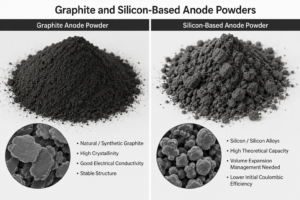
Contamination between different cathode chemistries (NMC, LFP, NCA, LMFP) or between graphite and silicon-based anode materials must be avoided.
Operator Safety
Certain battery materials contain nickel or cobalt compounds that require controlled handling to protect operators from airborne dust exposure.
Process Automation
Gigafactories increasingly require automated sampling systems capable of delivering consistent samples while minimizing operator intervention.
Why Representative Sampling Is Critical
Laboratory analysis is only as reliable as the collected sample.
A non-representative sample may lead to:
- Incorrect particle size analysis
- Wrong moisture measurements
- Misleading impurity results
- Unnecessary batch rejection
- Production delays
- Increased manufacturing costs
Representative sampling helps manufacturers make confident quality decisions while maintaining consistent battery performance.
Contamination Control During Sampling
Battery manufacturers devote considerable effort to minimizing contamination risks.
Modern sampling systems should:
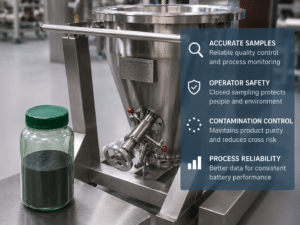
- Prevent external contamination
- Avoid cross contamination between batches
- Protect operators from hazardous dust
- Minimize dead zones where powder may accumulate
- Be easy to clean between production campaigns
These requirements are becoming increasingly important as battery chemistries continue to evolve.
Choosing the Right Sampling Valve
Not every sampling valve is suitable for battery powders.
The ideal solution should provide:
- Representative sampling
- Closed sampling
- Repeatable sample volumes
- Easy cleaning
- Robust stainless steel construction
- Compatibility with automated production lines
- Low maintenance requirements
FAMAT Sampling Solutions
With more than 50 years of experience in powder sampling technology, FAMAT develops sampling valves for demanding pharmaceutical, chemical and battery material applications where product integrity, operator safety and representative sampling are critical.
Typical applications include:
- Cathode powder sampling
- Graphite powder sampling
- LFP powder sampling
- NMC powder sampling
- Battery recycling powders
- Pilot plants
- Large-scale gigafactories
Their enclosed design helps reduce contamination risks while providing repeatable and representative powder samples.
Conclusion
Reliable powder sampling is one of the foundations of effective battery quality control.
As lithium-ion battery manufacturing continues to expand worldwide, representative sampling will remain essential for ensuring consistent product quality, improving process reliability and supporting safe battery production.
Looking for a reliable sampling solution for battery powder applications?
Discover how FAMAT can help improve safety, sample integrity and process reliability.
Frequently Asked Questions
What is representative powder sampling?
Representative powder sampling is the process of collecting a sample that accurately reflects the properties of the entire batch. Reliable sampling is essential because laboratory analyses are only meaningful when performed on representative material.
Why is powder sampling important in lithium-ion battery manufacturing?
Powder sampling helps verify raw material quality, monitor production processes, detect contamination and ensure that cathode and anode materials meet strict quality specifications before cell manufacturing.
How can cross contamination be prevented during powder sampling?
Cross contamination can be minimized by using enclosed sampling systems, contamination-free valve designs, appropriate cleaning procedures and dedicated sampling equipment for different battery chemistries.
Which battery powders can be sampled?
Sampling systems are commonly used for graphite, LFP, NMC, NCA, lithium compounds and recycled battery powders. The sampling method should be adapted to the material properties and process conditions.
Why are enclosed sampling valves preferred?
Enclosed sampling valves reduce operator exposure to hazardous powders, limit contamination risks and provide more repeatable sampling conditions.